If you have any question, please feel free to email us. We will touch with you as soon as possible.
Recently, the out-of-control of the epidemic in India has attracted worldwide attention. According to the data released by the Ministry of Health of India on April 30, India currently has 3.17 million confirmed cases. The cumulative number of newly confirmed cases in a single day has reached 360,000, and the cumulative number of deaths has reached 200,000. The new rate has reached a new high, surpassing the previous United States. Created a world record of 297,000 new cases in a single day. The Indian government predicts that this wave of new crown epidemics may reach its peak in mid-May, when there will be as many as 500,000 new confirmed cases every day.
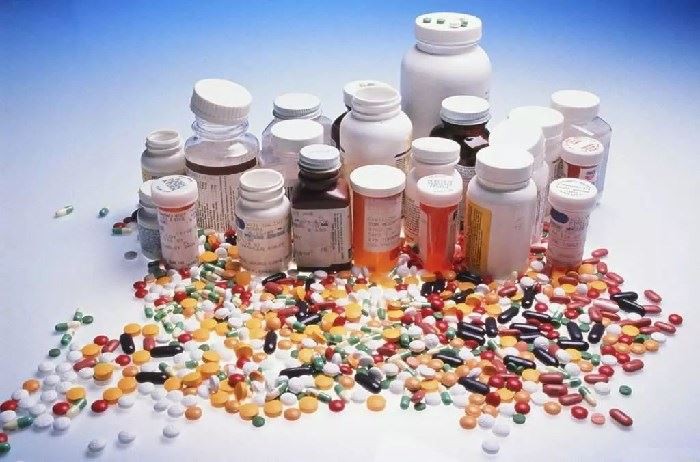
The outbreak of the epidemic in India, the raw material drug industry chain may change
Known as the "World Pharmacy", India is not only one of the world's major suppliers of raw materials, but also one of the world's major generic drug production centers. In today's world, apart from the United States, India and China are the two largest markets for global API supply, and the two together account for approximately 21% of the global industrial chain.
Affected by the continuing epidemic in India, many international API supply chains have been frustrated, and the shortage of APIs has intensified. It is expected that some API varieties will increase in price due to imbalance in supply and demand, ushering in a big rebound in performance.
In the API market, thanks to China's first recovery from the epidemic, some of the API orders of foreign pharmaceutical companies will be transferred to China in the short term, which will bring certain opportunities for Chinese API manufacturers to seize a certain market share. However, as the epidemic situation in India becomes more and more serious, Chinese companies can use this opportunity to establish long-term cooperative relationships with foreign pharmaceutical companies to prevent these orders from returning to India. Especially in the specialty API market, China cannot be replaced. Long-term advantages.
Sure enough, China's API concept stocks have surged across the board recently. Manova, which specializes in APIs as its main business, has a three-day continuous daily limit. Common Pharmaceuticals, Tonghe Pharmaceuticals, Hisun Pharmaceuticals, Zhejiang Pharmaceuticals, Seto Biotech, The share prices of related companies such as Yong'an Pharmaceutical and Garden Biotech also rose sharply during the intraday trading.
For generic drugs, India still has an irreplaceable advantage
India is a big country of generic drugs, and 20% of the global generic drugs come from India’s production of generic drugs. It can be said that it plays an important role in the global supply of generic drugs. This position cannot be replaced by other countries in the short term.
For generic drugs, China has very little say in the global generic drug market. This is mainly due to the insufficient R&D capabilities of Chinese pharmaceutical companies. Therefore, even under the influence of the epidemic, India’s generic drug market share is still not as partial as that of APIs. Transfer to China.
China's advantage in the global pharmaceutical industry chain lies in the production and supply of upstream APIs. After years of development, China has occupied a dominant position in the bulk API market, and the gap between the production of specialty APIs and India is gradually narrowing. However, China still has a very large gap with India and developed countries in drug R&D and production.
However, overall, the Indian epidemic is indeed positive for the Chinese API market. The epidemic has highlighted the status of Chinese API manufacturers, especially some foreign certified specialty API manufacturers, in the global pharmaceutical industry chain. With the development of the epidemic situation in India and the guarantee of domestic supply in the future, India has periodically restricted the export of some APIs and preparations, which has caused the European and American countries that have long relied on the import of Indian APIs to turn to China. This will also create opportunities for Chinese API companies that are the first to recover from the epidemic, especially some specialty API manufacturers that compete with India.
Here, API companies must remain positive and optimistic, but also calmly and rationally view the ups and downs. The long-term way to contend with Indian companies and even some foreign pharmaceutical companies is to concentrate on the transformation and upgrading of their own products.
Tel:
Fax:
Email:info@upharm.cn
Address:12th floor, No. 181, Kexue Avenue, Huangpu District, Guangzhou, China